
How to Choose the Right Oil Viscosity for Your Car
Understanding oil grades like 5W-30 and 10W-40. We break down what those numbers actually mean and why it matters for your specific vehicle.

Written by the kalvoridge editorial team, focused on practical, honest guidance for engine oil and filter maintenance across all vehicle types.
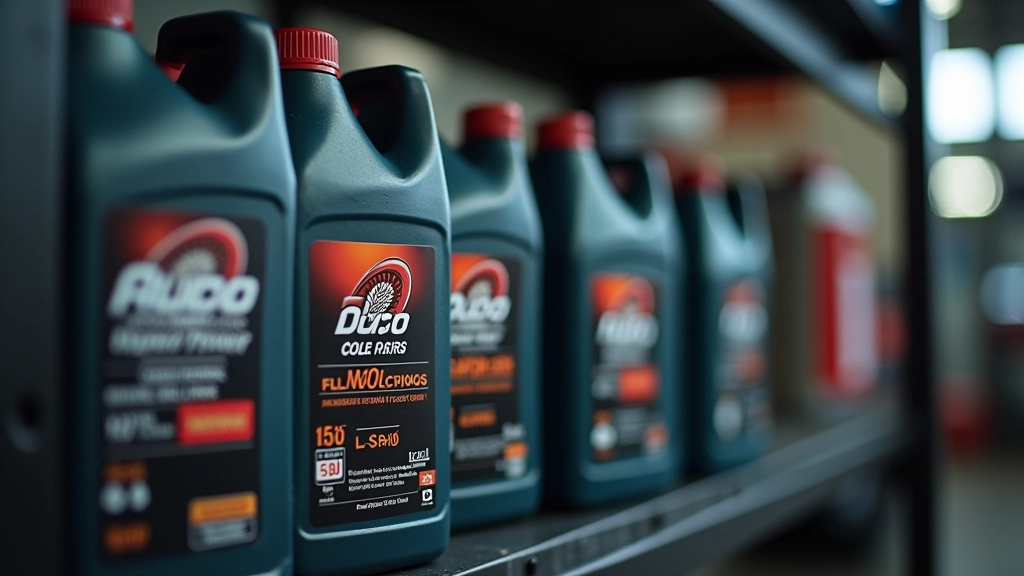
When you're standing at the shop looking at shelves lined with oil bottles, all those numbers and letters can feel like they're written in code. 5W-30. 10W-40. 0W-20. What's it all mean, and why does it matter so much? Here's the thing: choosing the right oil viscosity isn't complicated once you understand what you're actually looking at.
Breaking Down the Numbers and Letters
That first number — the one before the W — tells you how your oil behaves when it's cold. The W stands for winter. A lower number here means the oil flows more freely when temperatures drop. So 5W oil flows better in cold conditions than 10W oil does. That matters because thick, sluggish oil in winter makes it harder for your engine to start and can put extra stress on the starter motor.
The second number, the one after the hyphen, describes how thick your oil is at normal operating temperature — around 212°F (100°C). A 30-weight oil is thinner than a 40-weight. You want enough thickness to protect moving parts, but not so much that it creates unnecessary drag and reduces fuel economy. Most modern cars run something in the 30 range because it's that sweet spot.
Quick example: 5W-30 means your oil flows like a 5-weight oil in winter and a 30-weight oil at operating temperature. It's designed to give you easy cold starts plus solid protection when your engine's running hot.

Finding Your Car's Specific Requirement
Your car's owner's manual is your best friend here. Manufacturers test their engines extensively and specify exactly which viscosity your vehicle needs. Not what might work. What it actually needs. That's the spec you should follow, every single time. You'll usually find it either in the maintenance section or on a sticker inside the fuel door. Some cars need 5W-30. Others run on 10W-40. A few newer models use 0W-20 for maximum fuel efficiency. Don't guess — look it up. It takes two minutes and saves you from potential engine damage.
If you're driving in extreme climates, your needs might shift slightly. Living somewhere it drops to minus 20°F regularly? A 0W or 5W oil flows better than a 10W when you're trying to start your engine on a frozen morning. Driving in Arizona heat? You might benefit from a slightly heavier oil, but still stay within your manufacturer's recommended range. Don't go rogue and use a completely different viscosity because you think it's better. It's not.
This guide is informational and educational. Always consult your vehicle's owner's manual for the correct oil viscosity specification. If you're unsure about which oil to use, ask a qualified mechanic or your vehicle's dealership. Oil selection affects engine performance and longevity — when in doubt, go with what the manufacturer specifies.
Synthetic vs Conventional: Does Viscosity Change?
Here's where people get confused. Synthetic oil and conventional oil can both come in the same viscosity grades. You can get synthetic 5W-30 or conventional 5W-30. The viscosity number stays the same. What changes is the base oil and the additives, which affects how long the oil lasts and how well it performs under stress. Synthetic oil typically maintains its viscosity better at extreme temperatures and lasts longer between changes. But that 5W-30 rating? That's still describing thickness, not whether it's synthetic or not.
If your owner's manual says "synthetic 5W-30 recommended" or "any 5W-30," you've got flexibility. You can use conventional 5W-30 if that's what fits your budget, though you'll change it more often. You can use synthetic 5W-30 and go longer between changes. Just don't swap the viscosity grade thinking it'll improve performance. Stick with the recommended viscosity.


Common Mistakes People Make
The biggest mistake? Using the wrong viscosity because someone at the parts counter suggested it or a friend swears by it. Your engine was engineered with specific oil in mind. Going thicker doesn't mean better protection. Going thinner doesn't mean better fuel economy if it's not what your engine needs. It just means you're not protecting your engine the way it was designed to be protected.
Another common one is ignoring seasonal changes if you live somewhere with dramatic temperature swings. Some people use the same oil year-round without thinking about it. If you're in a region with brutal winters, switching to a lighter winter grade (like 5W-30 instead of 10W-40) makes sense. Just make sure both grades are approved for your vehicle. Don't invent your own combination.
Putting It All Together
Choosing the right oil viscosity comes down to three steps. First, find what your manufacturer recommends — check your owner's manual or the fuel door sticker. Second, understand what those numbers mean (winter flow rating and operating temperature rating). Third, stick with that spec when you buy oil. It's straightforward once you know what you're looking at.
Your engine depends on oil to keep everything moving smoothly. Using the right viscosity ensures that oil does its job properly — protecting your pistons, valves, and bearings the way they're meant to be protected. Don't overthink it. Your manufacturer's specification exists because engineers tested thousands of hours to get it right. That's the number you should use.

Related Articles

Step-by-Step Oil Filter Replacement Guide
Changing your oil filter doesn't have to be complicated...
Full Synthetic vs Semi-Synthetic: Which Should You Use
Comparing performance, cost, and longevity between oil types...

Understanding Your Vehicle's Oil Change Interval
How to read your owner's manual and determine the right timing...